
Decolonial Little Library
Indigenous stories For Good.
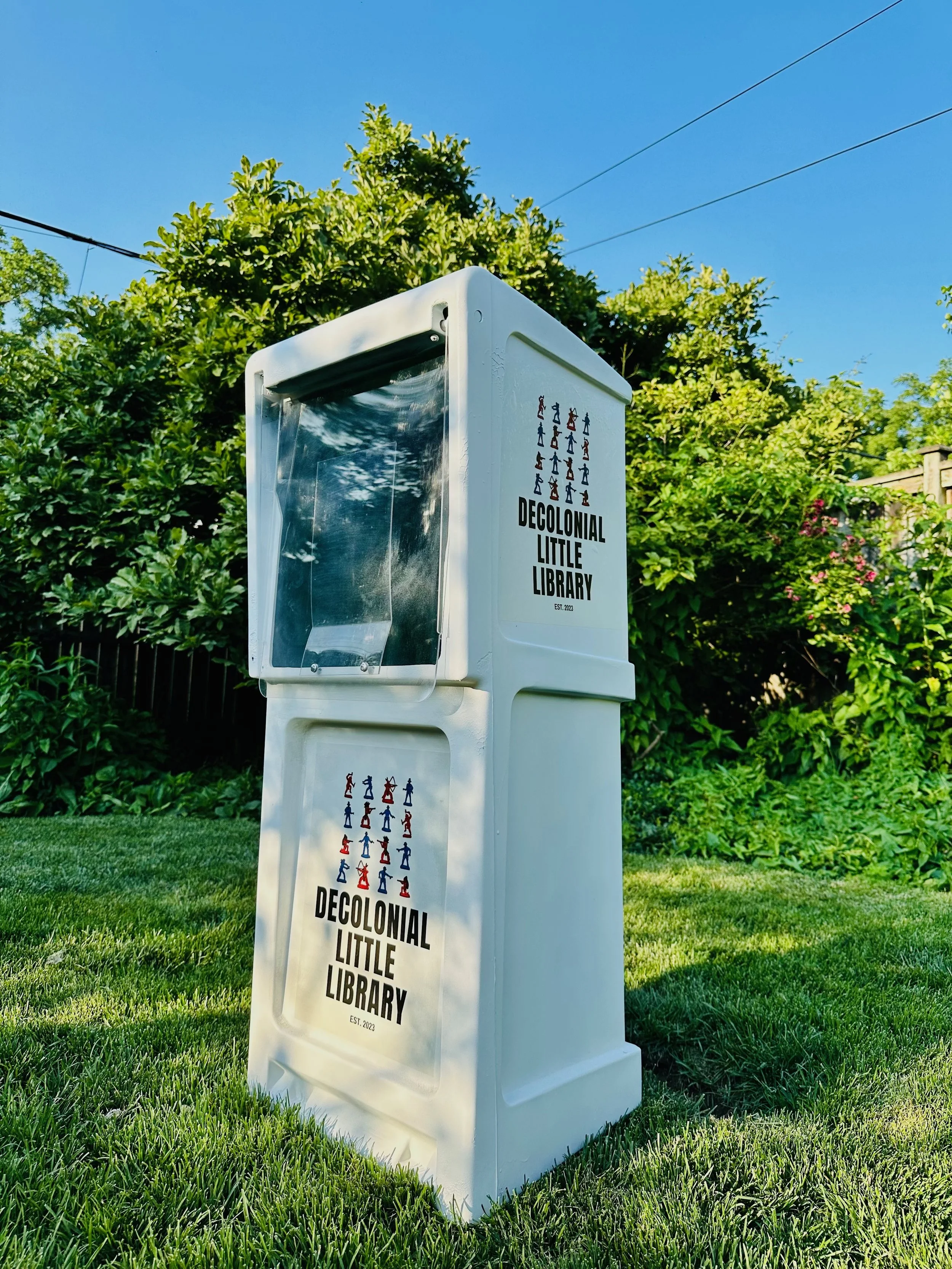
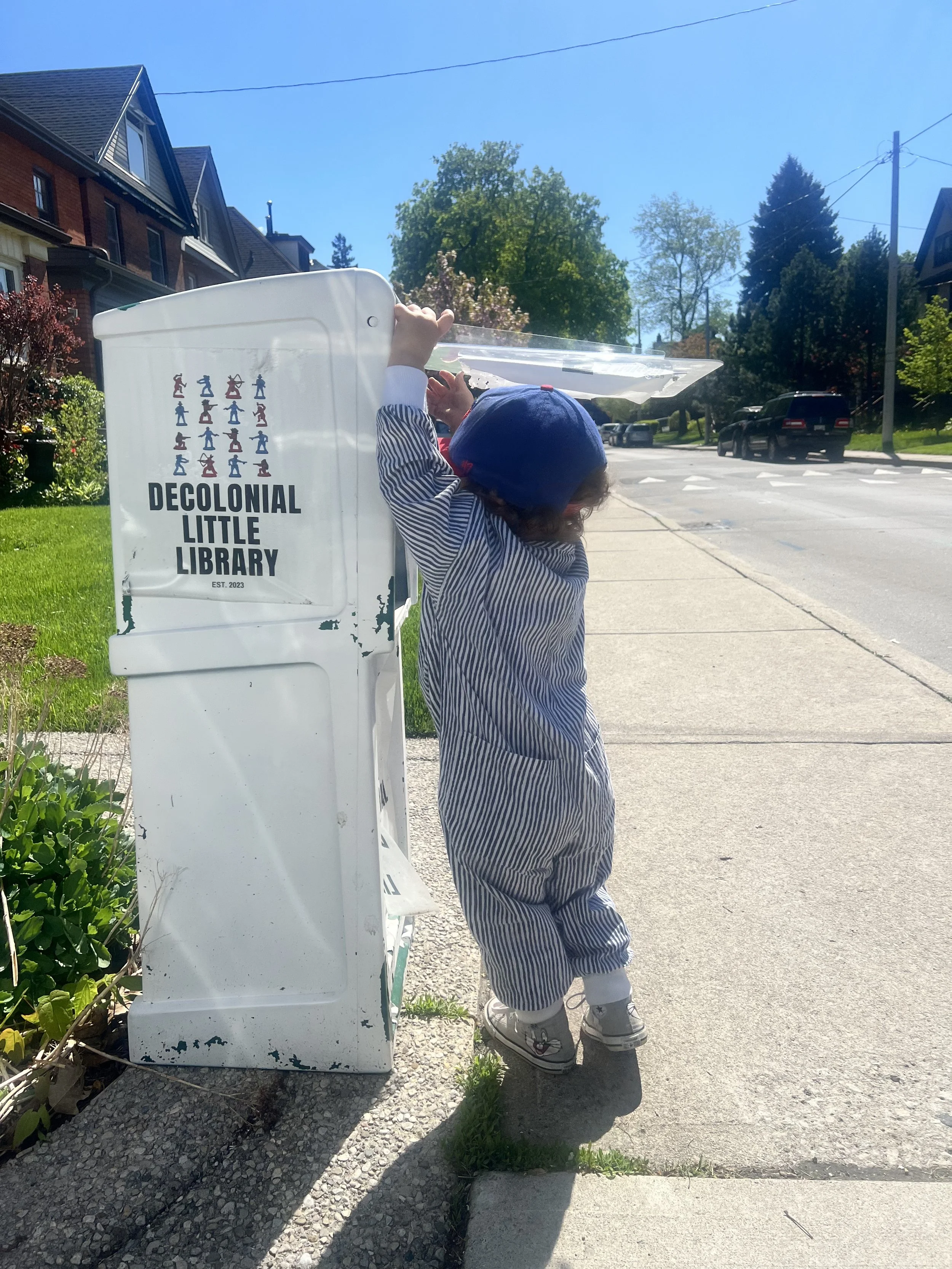
Decolonial Little Library is an Indigenous-led, family project. Founded in 2023 as a Free Little Library dedicated exclusively to Indigenous-authored stories and resources. What began as a single library outside our home in Hamilton has grown into a trusted community touchpoint and an everyday way for people to engage with Indigenous stories, learning, and reconciliation.
Grounded in Indigenous teachings of reciprocity, shared stewardship, and collective responsibility.
Guided by the Dish With One Spoon: Our project follows the Dish With One Spoon wampum, which teaches that we all share responsibility for the land, water, and each other. The Decolonial Little Library reflects this teaching and is a shared resource held in trust by the community.
The Collection: We offer a curated selection of Indigenous-authored books and resources, including works for children, youth, and adults.
The Space: Libraries are placed in community spaces where families already gather and feel welcome. They are living, relational spaces that encourage reflection, dialogue, and connection through story.
Expansion: Our initial expansion will launch new community-hosted library sites across Hamilton in June to recognize National Indigenous History Month. Our physical libraries are housed in repurposed publisher newspaper boxes, currently being sourced.
Who We Are
Decolonial Little Library is stewarded by Madeline Wilson Shaw, a Haudenosaunee mother and advocate for intergenerational healing, and Ryan McMahon, an Anishinaabe writer and storyteller. The project is grounded in family and community care and a commitment to embedding reconciliation into everyday life.
Why We Do This: Impact, Access, and Reconciliation
Indigenous stories bring us further, faster. Access to Indigenous stories, languages, and ways of knowing is limited in many community spaces.
The Decolonial Little Library is a practical tool for systemic change, driving impact across three key areas:
Increase Access: We increase access to Indigenous-authored literature and storytelling traditions.
Support Intergenerational Learning: We foster intergenerational learning and cultural continuity through self-directed, relational education rooted in lived experience.
Drive Social Change: We centre storytelling as a practical tool for learning, empathy, and social change.
Decolonial Little Library is a low-barrier, non-institutional entry point to reconciliation. The project aligns with the Truth and Reconciliation Commission’s Calls to Action related to Indigenous language, culture, and education, including Calls to Action 13–15, 62–63, and 92(iii).
How to Be Involved
Decolonial Little Library is a shared, community-held project. There are many ways to take part. Email us at info@decoloniallittlelibrary.com
Host a Library
We are expanding into community spaces across Hamilton. If you are part of a space where families gather and would like to host a library, we’d like to hear from you.
Contribute Books
We welcome donations of Indigenous-authored books in good condition for children, youth, and adults.
Use the Library
Take a book. Read it. Share it. Return it when you can. This is a living system built on trust and reciprocity.
Support the Work
If you’d like to support the project's growth, financial contributions help us build and install new library sites.
Partner With Us
We are open to partnerships with organizations aligned with this work, particularly those focused on community, learning, and access.
Stay Connected
Follow along as new library sites launch and the collection grows.
→ Instagram @decoloniallittlelibrary